Protective Life Disability Lawyer Representation for Your LTD Insurance Claim

If you are a dentist with disability insurance through the American Dental Association, your coverage is now with Protective Life Insurance Company. Our disability insurance lawyers have represented hundreds of dentists with ADA disability claims over the past 25 years, first under Great-West and now under Protective. We know how Protective evaluates dental claims, what documents it demands, and the policy language it relies upon to reduce or deny disability benefits.
Protective markets the ADA plan as affordable, true own occupation coverage. That promise sounds simple, but when a dentist actually files a claim, Protective digs deep into your procedure codes, your financial records, and your medical evidence to decide whether you are totally disabled, partially disabled, or not disabled at all. You should have an experienced disability lawyer on your side before Protective makes that decision.
Who Is Protective Life and What Happened to Great-West?
Protective Life Insurance Company is headquartered in Birmingham, Alabama and is a subsidiary of Dai-ichi Life Holdings. Protective sells both individual and group long term disability insurance, but most of the Protective claimants who contact our law firm are dentists covered under the ADA Members Insurance Plans.
For many years, the ADA disability plan was insured by Great-West. In 2019, Protective completed an approximately $1.2 billion transaction to take over Great-West’s individual life insurance and annuity business, the largest acquisition in company history, and began administering the ADA plans. In 2022, Protective sent policyholders an amendment identifying the coverage as Protective disability insurance while stating that the terms of the policy would remain the same.
From what we have seen, Protective continues to sell essentially the same policy language that Great-West wrote for years. Like every disability insurance company, Protective can adjust the language of the policies it sells going forward, but the policy language in effect when your coverage was issued is the language that controls your claim. If your paperwork still says Great-West, you should also have received notice that Protective is now your insurance company, and your claim will be filed with and decided by Protective. You can learn more about the history of these policies on our Great-West disability claims page.
How Does Protective Define Disability?
Like most disability policies, the Protective ADA policy provides benefits for both total disability and partial disability. Total disability generally means you are unable to perform the material duties of your occupation and you are not working. Partial disability applies when you continue working in a limited capacity and suffer at least a 20% loss of income, in which case Protective pays a percentage of your monthly benefit based on the income you have lost. In our experience with these policies, once your loss of income exceeds 75%, Protective will pay the full total disability benefit.
Protective Requires Objective Medical Evidence of Your Disability
Reading only the definitions of total and partial disability does not tell the whole story. Further back in the policy, Protective includes a requirement carried over from the Great-West policies that makes the payment of benefits contingent on you providing objective medical evidence of your total or partial disability. This creates a heightened burden of proof that many dentists do not discover until Protective uses it to question their claim.
Our attorneys have litigated this exact objective medical evidence issue. Many of the conditions that end dental careers, such as chronic neck and back pain, carpal tunnel syndrome, and shoulder disorders, are exactly the type of claims where Protective will argue that your symptoms are not supported by objective findings. Your medical records need to document your limitations in a way that satisfies this policy language before you ever file a claim.
Is the Protective ADA Policy a True Own Occupation Policy?
Protective advertises its ADA disability plan as a true own occupation policy. Whether it actually works that way when you file a claim depends on the facts, and there are important nuances that every dentist should understand.
This issue came up with the older Great-West policies as well. When a dentist continued to own a practice or perform some duties, the insurance company would argue that the dentist was still performing part of their occupation and was only partially disabled. Our attorneys have litigated this issue. In one case, our client stopped all chairside dentistry and began acquiring and managing dental practices. We were able to get the insurance company to agree that he was no longer practicing dentistry and was totally disabled.
The problem arises when a dentist gives up the procedures they can no longer perform but continues doing lighter procedures. When Protective reviews your production reports and ADA procedure codes, it will point out that you performed those lighter procedures before your date of disability, even if they were only a small percentage of your work. Protective will then argue that because you are still performing some of your prior procedures, you are only partially disabled rather than totally disabled.
On the other hand, if you leave clinical practice entirely, for example to teach at a dental school, Protective is far more likely to view that as a completely different occupation and treat you as totally disabled. If you plan to stay in the dental profession and change the way you practice because of your medical condition, you need a careful review of your policy and your billing history before you make that change.
Protective Disability Claims for Dental Practice Owners
Over the last several years, there has been a tremendous amount of consolidation in dentistry, with large business-owned group practices buying up individual dental offices. Our lawyers have represented dentists in every scenario this creates. Some dentists sold their practices and became straight employees of the group that bought them. Others owned multiple offices, stopped practicing, and were then told by Protective that they were not totally disabled because they had a dual occupation as both a dentist and a business owner.
The ADA policy can protect you if you become disabled from running your business, but it was really written with the intent of protecting your ability to practice dentistry. It does not contain the type of specialty definition of disability we sometimes see in individual policies sold by companies such as Guardian and MassMutual.
When a dentist contacts us about a Protective claim, our goal is to determine how to maximize the benefits available under the policy while you continue doing whatever you are still physically capable of doing. That requires a detailed analysis. We typically review your ADA procedure code reports, your monthly profit and loss statements, and at least two years of tax returns. We then compare what you personally were doing with what the practice as a whole was doing, and what you are able to do now with what you did before your disability.
If you are a practice owner, we also look at who was managing the business. Did you have a CFO, an office manager, or someone handling advertising? Being a passive owner of a practice is generally not a problem. If you personally handled all of the management and operations, however, the argument for total disability becomes more difficult and must be presented very strategically. Learn more about disability claims for dentists and disability claims for business owners.
Should Dentists Have Both an ADA Policy and an Individual Disability Policy?
The Protective ADA plan is offered through the association, and because the ADA negotiates group rates for so many members, the coverage is usually a relatively good buy. An individual disability policy purchased through an agent from a company like Berkshire, MassMutual, or Northwestern Mutual will cost more. The tradeoff is that individual policies can contain better policy language, so in some ways you get what you pay for.
We are not telling dentists to avoid the ADA policy. However, if you are a practice owner, you should understand that the ADA policy language can put you in a bind. If you can afford it, we often recommend carrying both the ADA policy and an individual disability policy. In our experience, the ADA policy does not typically reduce your benefit because you also collect from an individual disability policy, and many of our dentist clients have the ADA policy in addition to coverage from other carriers. The other income provisions of your specific policies should always be reviewed to confirm how they work together.
How Can Dell Disability Lawyers Help With My Protective Disability Claim?
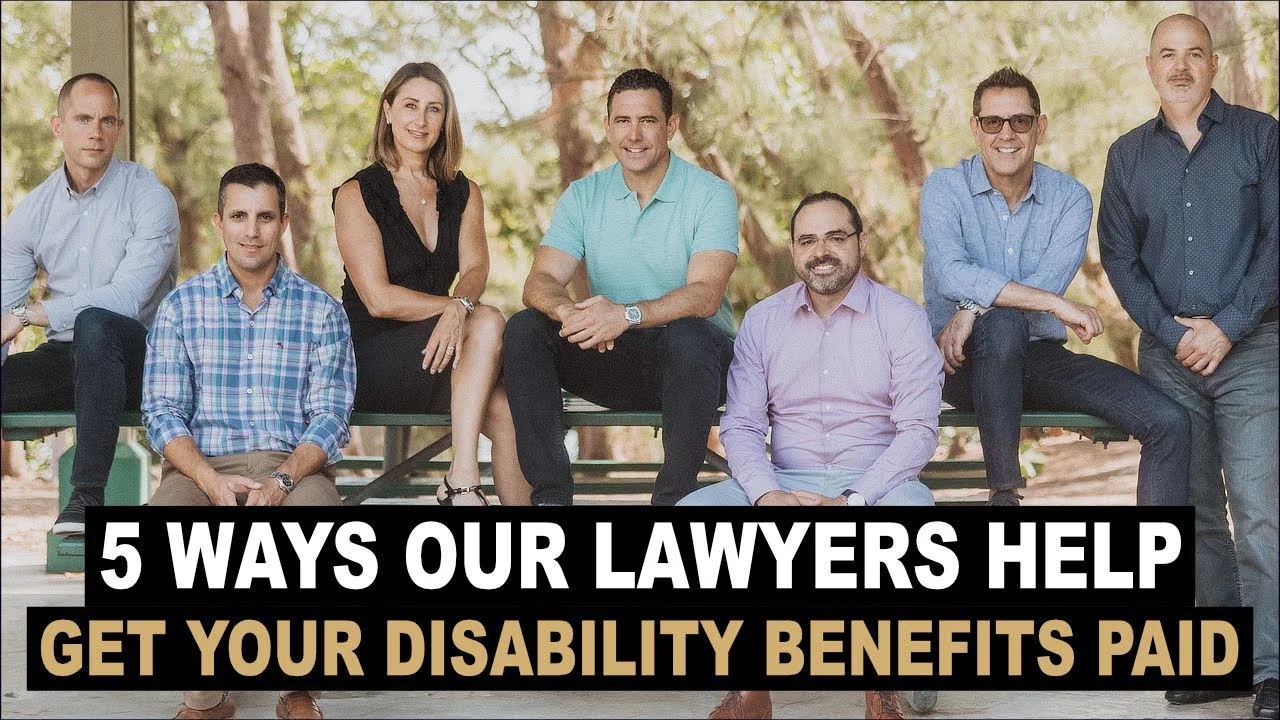
Whether you are a dentist or have a Protective policy in another occupation, our lawyers can help at every stage of your claim. We represent claimants against every major disability insurance company, and we are available to help you no matter where you live in the country.
1. Planning Ahead and Applying for Protective Disability Benefits
For most dentists, disability does not happen overnight. Other than a car accident or a sudden serious diagnosis, the dentists we represent usually suffer from chronic orthopedic conditions affecting the neck, back, hands and wrists, and shoulders caused by years of constant reaching, bending, pulling, and pushing. Dentistry is a tremendously physical profession, and the research on the working life expectancy of dentists reflects that.
The dentists who plan ahead contact us months, and sometimes years, before they stop working. They are still practicing, but they see the writing on the wall. This gives our lawyers the opportunity to guide you through the process so that when it is time to file, your claim has been built in a way that does not leave Protective asking why something is missing, which is how many denials begin. Learn more about how we help you get your disability application approved.
2. Managing Your Protective Claim After Approval
Approval is not the end of the process. If you are already receiving benefits and you are tired of dealing with Protective’s ongoing requests for medical records, claim forms, and financial documentation, we can handle communication with Protective and manage your claim on a monthly basis. Learn more about how we help prevent a disability benefit denial.
3. Filing a Protective Disability Appeal
If Protective has denied or terminated your benefits, the appeal is your opportunity to submit the medical, occupational, and financial evidence needed to reverse the decision. Protective’s objective medical evidence requirement and its review of your procedure codes and income records must be addressed directly. Learn more about how we submit a strong appeal package.
4. Suing Protective for a Disability Benefit Denial
When a Protective denial cannot be resolved through the claim process, our lawyers are prepared to file a lawsuit. Our attorneys have already litigated the key policy issues that come up in these claims, including the objective medical evidence requirement and whether a dentist who still performs some work is totally or partially disabled. Learn more about how we sue your disability insurance company.
Resolved Case Example: Dentist With Neck and Back Disorder Wins Unum and Protective Life Claim

Disability insurance attorneys Steven Dell and Gregory Dell discuss how our law firm helped a dentist suffering from neck and back disorders get disability benefits approved under both a Unum policy and a Protective Life policy.
Answers To Your Protective Life Disability Questions
My disability policy says Great-West. Who do I file my claim with?
Your claim will be handled by Protective. Following the 2019 transaction, Protective Life took over administration of the ADA disability plans and later notified policyholders that the coverage would be known as Protective Life disability insurance. The terms of your policy did not change because the company name changed.
Do you only help dentists with Protective Life disability claims?
No. Most of the Protective Life claimants we represent are dentists with ADA coverage, but our lawyers help claimants in every occupation with Protective policies and with every other major disability insurance company.
Do I have to stop working before I contact a disability lawyer?
No. Some of the best outcomes we see come from dentists who reach out while they are still practicing and struggling. Contacting us early allows our lawyers to help you prepare your medical, occupational, and financial documentation before you file, rather than trying to fix a weak claim after Protective Life denies it.
Free Protective Life Disability Case Review
If you have a Protective Life disability insurance policy, our lawyers can help you no matter what stage your claim is at, whether you are preparing to apply, currently receiving benefits, or facing a denial that requires an appeal or lawsuit. We represent disability claimants nationwide and we always provide a free initial phone or email consultation. Contact our disability insurance lawyers today for a free review of your Protective Life disability claim.