Our Disability Lawyers Help You Collect Cigna Benefits
Following New York Life Insurance Company’s $6.3 billion dollar purchase of Cigna’s disability and life division in December 2019, New York life became one of the top five largest group disability insurance companies in the world.
The impact of the sale on Cigna claimants will be minimal as New York Life’s plan is to keep everything the same and rebrand as New York life instead of Cigna. In order for New York Life disability claimant’s to have a good understanding of what they are dealing with, it remains important to have an understanding of how Cigna handled disability claims before the sale. For the most current information please visit our New York Life Disability page.
On a daily basis our disability attorneys speak with individuals that either have been denied disability benefits by Cigna or are concerned that their Cigna disability claim will be denied.
Numerous federal ERISA disability lawsuits are filed against Cigna on a weekly basis due to their unreasonable claim denials. Our disability insurance attorneys have assisted hundreds of Cigna claimants with either their application for benefits, disability ERISA appeal, lawsuit against Cigna, or a Cigna lump-sum buyout offer.
Why Does Cigna Deny So Many Disability Claims?
As a multi-billion dollar corporation Cigna is in business to collect premiums and try to make as much money as possible. While Cigna does not deny every short term or long term disability claim, they rely upon ERISA regulations and any other opportunities to deny a claim.
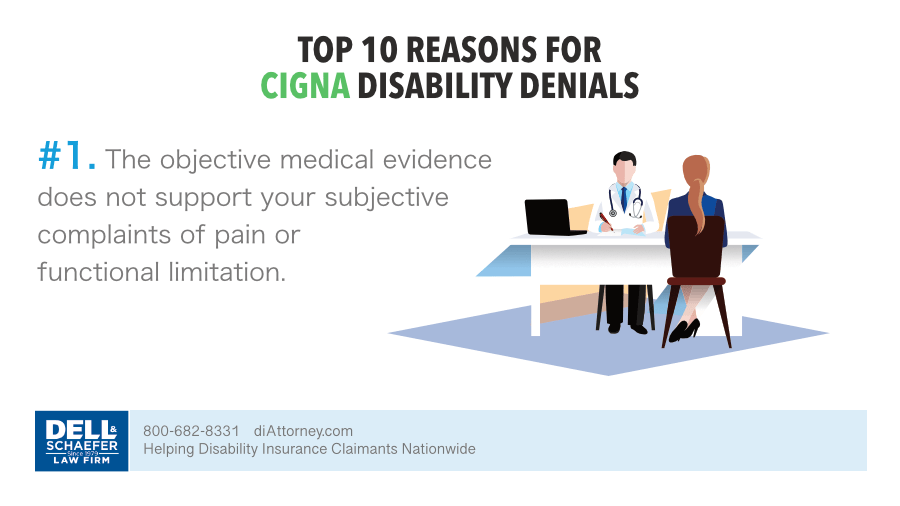
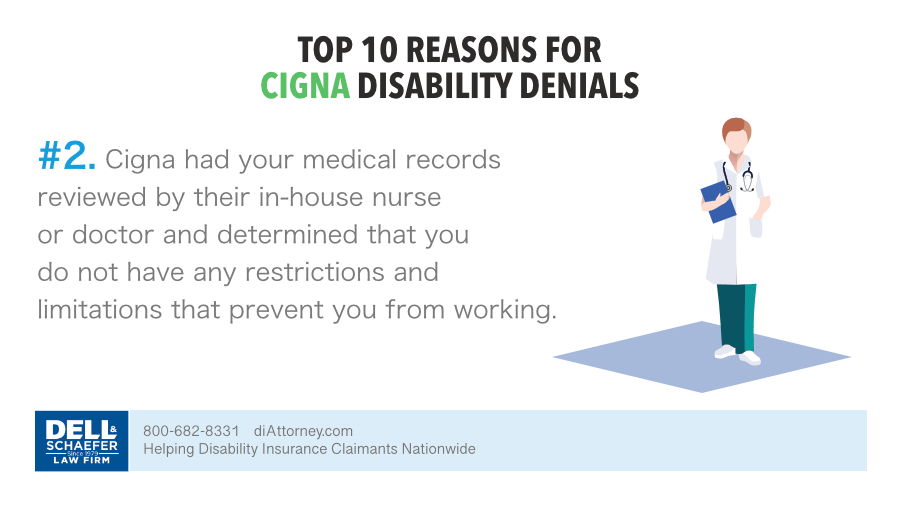
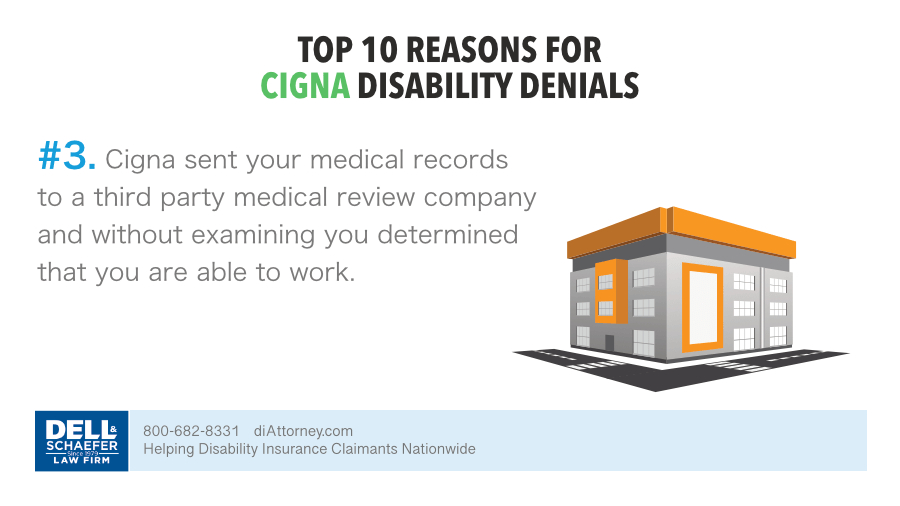
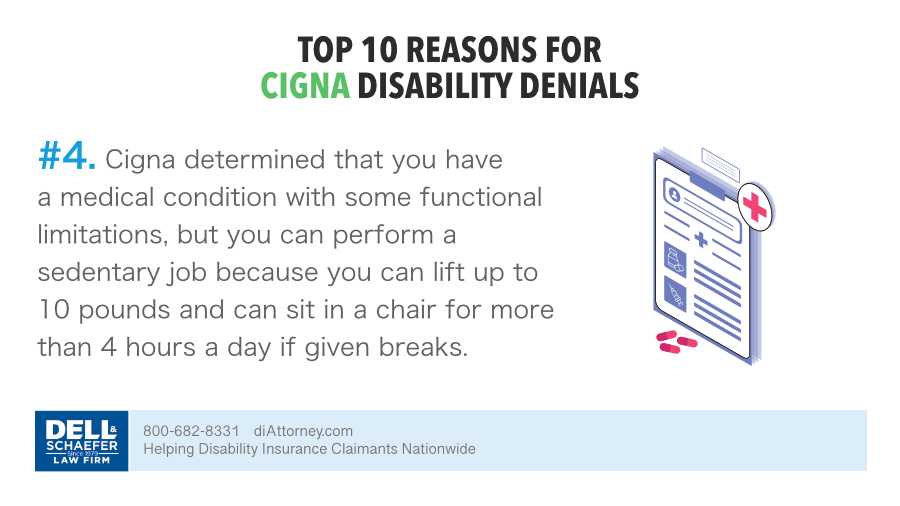
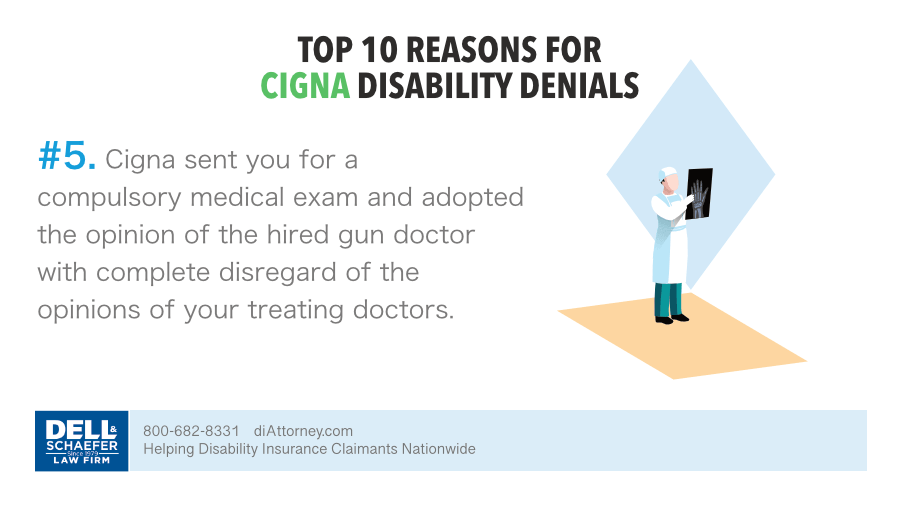
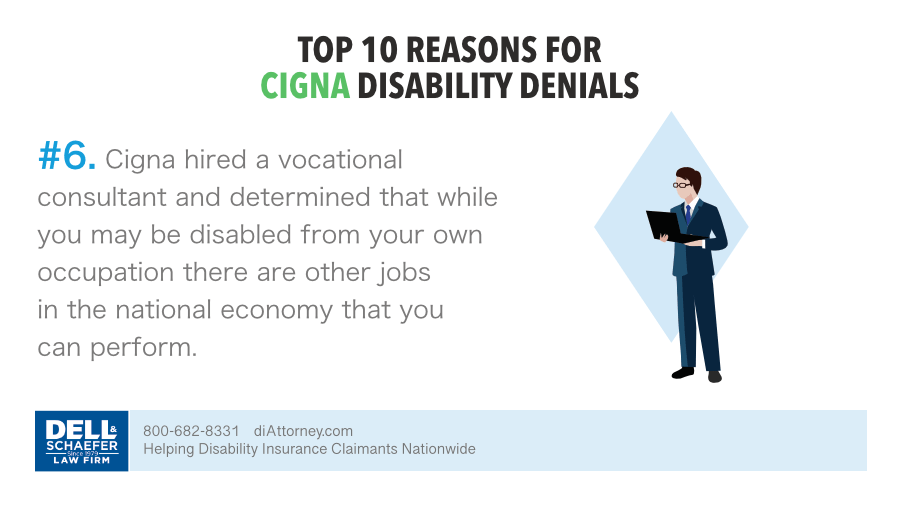
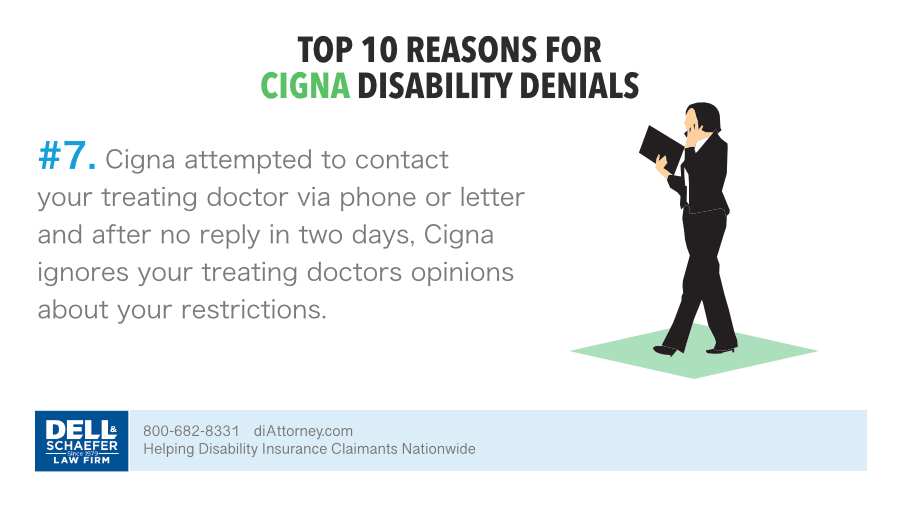
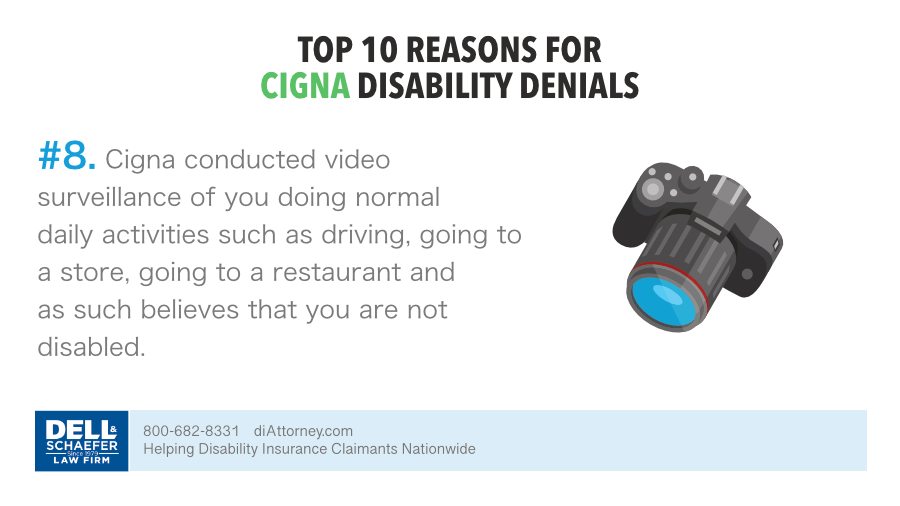
From our law firm’s experience, Cigna is very careless in their review of a disability claim and will often deny disability benefits without physically examining the claimant. Additionally, they rely on unauthorized video surveillance of a claimant in order to prove that a claimant should be able to return to work. A majority of the Cigna disability denials come when the definition of disability changes from “own-occupation” to the “inability to perform any gainful occupation”. Most Cigna denial letters will state that the claim has been denied as a result of “a lack of objective evidence”.
Cigna Disability Claim Free Information, Videos, Lawsuits and Reviews
We want you to know as much as possible about Cigna and their disability claim handling tactics. We regularly update this section of our site.
We hope you find the following information about Cigna helpful:
- Watch Cigna disability videos featuring attorneys Gregory Dell, Stephen Jessup and Cesar Gavidia;
- Read Reviews from past Cigna claimants
- Read summaries about some of the Cigna disability claims that our firm has resolved;
- Read comments from Cigna claimants, ask questions, or share your experience about dealing with Cigna. Our lawyers routinely respond to the posted comments;
- Read summaries about Cigna lawsuits and court decisions around the country. These summaries help you to learn more about the way in which Cigna behaves;
- On May 13, 2013 Cigna entered into a Regulatory Settlement Agreement with California, Connecticut, Maine, Massachusetts, and Pennsylvania which requires Cigna to pay a fine of $1.675 million dollars to the five states and re-evaluate wrongfully denied claims to the citizens of these states from the years 2009 and 2010, except California residents are entitled to have claims reviewed from 2008 through 2010. Click here to either watch our video or to learn more about the 2013 Cigna Regulatory Settlement Agreement.
- In 2009 the California Department of Insurance fined LINA / Cigna $600,000 and ordered them to re-evaluate thousands of wrongfully denied long-term disability insurance claims. Click here to read the California Settlement Agreement and the Report of Market Conduct regarding LINA / Cigna’s wrongful long term disability claims handling practices.
Our Disability Lawyers Are Constantly Battling and Monitoring Cigna
As a disability insurance law firm with clients located nationwide, we constantly monitor the claims handling tactics of Cigna throughout the country. We track every lawsuit and court decision across the country dealing with Cigna. At any given time we have numerous lawsuits pending against Cigna. It is our responsibility to know everything and anything about Cigna in order to give our clients the best chance of collecting disability benefits. Contact any of our disability insurance attorneys for a free consultation to discuss your disability benefit claim.
Resources to Help You Win Disability Benefits
Disability Benefit Denial Options

Submit a Strong Cigna Appeal Package
We work with you, your doctors, and other experts to submit a very strong Cigna appeal.

Sue Cigna
We have filed thousands of disability denial lawsuits in federal Courts nationwide against Cigna.
Protect Your Benefits
Get Your Cigna Disability Application Approved
We help claimants throughout the entire application process.

Prevent a Cigna Disability Benefit Denial
We manage every aspect of your disability claim following claim approval.

Negotiate a Cigna Lump-Sum Settlement
Our goal is to negotiate the highest possible buyout of your long-term disability policy.
Cigna Reviews
(0)
Answered Questions by Our Lawyers
(70)
Showing 8 of 70 Answered Questions
Q: Why can Cigna get away with not paying me anything for my disability?
A: Barbara: It sounds like you have a complex situation. Unfortunately, it also sounds like you had legal represe... Read More >
Q: Do I have to be an active employee to apply for LTD?
A: Lori: Generally speaking, if out on claim and a new/different disability arises you can add that to your exist... Read More >
Q: Can Cigna refuse to give me a copy of my short term disability policy?
A: Dave, since the policyholder is your employer CIGNA can refuse to provide it to you. You should contact your e... Read More >
Q: Is my plan governed by ERISA?
A: LeRoy, we will have to review the policy in order to give an opinion as to whether it would be governed by ERI... Read More >
Q: Can I add a physical disability claim to my mental health one without seeing a doctor (hard to get an appointment with COVID)?
A: Heather, the only way to effectively include your physical disability claim is to see a physician qualified to... Read More >
Q: Do you handle CIGNA cases in Florida?
A: Vito, yes. We absolutely do handle Cigna cases in Florida. Please email me at Rachel@diattorney.com and send... Read More >
Q: How can Cigna get away with not answering my calls?
A: Carol, knowing Cigna it sounds like they are approving your claim on appeal for a closed period of time and th... Read More >
Q: Do you handle closed cases only, or open ones as well?
A: Renee, we handle all types of open claims with Cigna – applications, claims handling, appeals, lawsuits, buy... Read More >
Helpful Videos
(875)
Showing 12 of 875 Videos
Disability Benefit Tips
(330)
Showing 8 of 330 Benefit Tips
Is Cigna Seeking To Offset Disability Benefit by Social Security Survivor Benefit?
I recently spoke with a gentleman who called into our office who has been receiving long term disability benefits from Cigna for several years... Read More >
Is Cigna's Denial of Your Appeal Really a Denial?
Following the submission of your appeal has Cigna sent you a letter stating that after review of the information provided on appeal their deci... Read More >
What Should a Claimant Expect When Suing Cigna or any Other Disability Company for Long Term Disability Benefits?
ERISA disability lawsuits are complicated due to the pro-insurance company laws. Our disabili... Read More >
Are Cigna Short Term Disability Denials on the Rise?
When it comes to claims for short term disability benefits under ERISA governed group policies, more often than not the short term disability ... Read More >
Cigna's latest strategies for handling and denying disability benefit claims
Watch Gregory Dell and Stephen Jessup discuss Cigna's latest strategy for handling disability... Read More >
Is a Claimant's Complaints of Pain Enough to Qualify for Short or Long Term Disability Insurance Benefits?
The answer to this question applies to the vast majority of long term disability insurance claims that we handle on a daily basis. Pain is sub... Read More >
Is My Insurance Company Allowed to Take An Offset of My Monthly LTD Benefit for Social Security Benefits My Kids Receive As A Result of My Disability?
It is common practice for insurance companies to find ways to limit the amount of money they have to pay to claimants. If you are receiving lo... Read More >
Is My "No-Fault" Auto Insurance Settlement an Offset Under My Long Term Disability Insurance Policy?
If your policy is an employer provided group disability policy governed by ERISA, then any proceeds you receive from a settlement based on "No... Read More >
Dell Disability Cases
(374)
Showing 8 of 374 Dell Disability Cases
Cigna Sued For Failing To Make A Timely Decision on Appeal
If your disability insurance claim has ever been denied you will have received a formal denial letter from your insurance carrier in which you... Read More >
CIGNA Overturns a Waiver of Premium for Group Life Insurance Policy
In early 2019, the widow of a decease man contacted our firm as she was troubled by the actions of CIGNA, also known as Life Insurance Company... Read More >
Cigna Admits Error In Denying Disability Benefits
Our client, a former school teacher, suffering from multiple severe medical conditions including autonomic nervous system damage, small fiber ... Read More >
CIGNA Overturned Their Denial of LTD Benefits for Nevada Healthcare Coordinator
Our client, Ms. G, formerly worked as a Healthcare Coordinator for a large regional healthcare provider. For many years Ms. G suffered from ch... Read More >
CIGNA Denies Technology Manager under the Own Occupation Provision & Dell Disability Lawyers Wins Appeal
Our client, Mr. N, formerly worked as a Technology Manager / Vice President for a large bank. For many years Mr. N suffered from chronic debil... Read More >
CIGNA overturned previous denial of waiver of life insurance premiums
Our client was the husband and beneficiary of Ms. S, who formerly worked as a registered nurse for a regional Healthcare System. In January 20... Read More >
Dell Disability Lawyers successfully appeal denial of benefits to claimant with CRPS/RSD
Ms. S contacted our firm after receiving a letter from her disability carrier, Cigna, denying her claim for short term disability benefits und... Read More >
LINA overturned its previous LTD denial for Medical Technologist
Our client, Ms. H, formerly worked as a Medical Technologist for a National Clinical Laboratory. In July 2017 a number of medical issues, incl... Read More >
Disability Lawsuit Stories
(765)
Reviews from Our Clients